The Real Estate Market in Montreal: Saturation and Price Drops
Posted on mai 15, 2013 by Frank
In the past few years, Montreal has been a very strong target for Real Estate investors. It became a battlefield between many estate developers such as Samcon and Mondev, bringing many new condominium projects for sale or even for rental. Even though Canada throughout the years wasn’t affected that much by the subsequent economic crises, it seems that the Eldorado has gotten a lot less attractive in the past few months for investors. Why is it so? Different indicators prove that the next year might be pretty tough for real estate investors. Let’s dive a bit into the numbers to see what is happening in Montreal right now.
Condominiums for rental: a huge spike
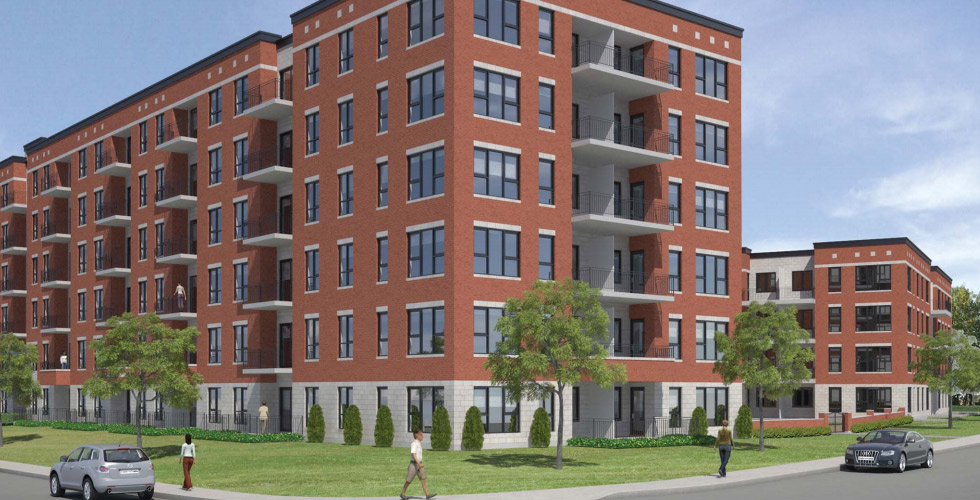
The statistics are very impressive: there were 40% more condominiums in Montreal to rent in 2012 in comparison to 2011 on Montreal’s main island. The proportion in comparison to regular apartments is still pretty low, but the consumer’s reaction hasn’t been as enthusiastic as developers were expecting. In January 2013, rental brokers were extremely busy trying to help their customers find people to move in their new units. To compensate for the overcapacity of the market, condo owners were forced to drop prices by an average of 10%, which is a pretty harsh number considering that prices usually increase over the years, not the opposite. Those who decide to keep their rental price stable are often stuck with empty units for a few months.
The prices are too high, say everyone
Many people talking about Montreal’s real estate believe that prices are condemned to go down. The credit agency Fitch stated recently that the residential real estate market in Canada was overvalued by about 20% at the moment. Fortunately, it doesn’t believe that prices will crash by 20% in the near future; however, a 10% drop could be expected.
The American agency Demographia also concerned what everybody fears right now. Its report states that real estate prices of biggest Canadian cities (Vancouver, Toronto and Montreal) are severely inaccessible. For new families, living outside of the city has become the easiest and the most attractive alternative, even though traffic jams have become an increasing pain for everyone.
The apocalypse has already (slowly) started: condominiums’ prices in Montreal went down by 4% in the last months. It is not the worst part: during that period, sales dropped by 17%! It is unclear whether there has been a decline in the demand or the market is simply saturated, but since many projects are still underway at the moment, big real estate developers are going to have to fight with teeth and nails in order to sell their properties at a good price.
Differenciation: the best option for selling?
Of course, if the situation continues, real estate developers will not have the choice and will reduce their prices accordingly. However, as many projects still are in construction around Quebec’s metropolis, they will have to differentiate themselves from the crowd in order to get buyers. Some projects have been focusing on an ecological approach in order to appeal to young environmentally-conscious families, for example. A Montreal IT startup called Urban Immersive also started convincing developers to switch to virtual immersive visits in order for customers to have a better feeling of the condominiums before going for visits. It might be an expensive solution in comparison to the regular “pictures and video” approach, but in a tough market that seems to be on decline, it might be worth giving a shot.
One thing is sure: in the next months, each and every investor will closely be following market indicators and praying for the bubble not to explode!