Sharp drop of tourism in Quebec
Posted on janvier 14, 2013 by Frank
Since 2002, Quebec has lost 40% of U.S. tourists and 28% of Canadian tourists. The industry is, however, a marked growth elsewhere in the world. Autopsy of a problem.
Last week, Montreal hosted no less than 17 000 delegates from Rotary clubs gathered at the World Congress of the humanitarian organization. By adding the Grand Prix Formula 1, we talk about benefits of more than 100 million dollars in one city. In short, the manna for a tourism industry that needed it. But this beautiful June greeted with relief by hoteliers, restaurateurs and the whole string of businesses that revolve around the travel industry, does not reflect the trend of recent years, namely that Quebec attracts less less foreign tourists, but also from other provinces.
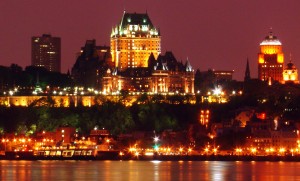
In fact, since 2002, speaks of a decrease of more than 40% of the number of American tourists, a market traditionally considered « natural. » A sharp drop which can not be explained solely by the rising dollar and the need to have a passport to enter the country, say people familiar with the industry trends. The decline in visitors from other parts of Canada stands on it at 28%. This decline was partially offset by the increase in the number of Quebecers who have decided to spend their holidays here. But these travelers, who represent 75% of tourists year in and year out, spend just 30% of that expenditure an American visiting us.
This loss of speed also applies to Canada, which suffered a 20% decrease in the number of foreign tourists since 2002. The country, which was previously one of the 10 favorite destinations on the planet, is now ranked 14th. It is even 106th of 130 countries in terms of price competitiveness, according to data compiled by the World Economic Forum. (http://www.votre-alibi.com for more information on tourism)
The worst thing is that this decline occurred while the sector globally, knew very marked growth. From 2002 to 2008, international tourism grew by 31%. Last year, no fewer than 800 million people traveled on the planet. A figure that is expected to double within 10 years. « Virtually all countries have grown … except Canada, « noted recently the President and Chief Executive Officer of Transat, Jean-Marc Eustache, in a speech in which he reported his concerns for the future of Canada’s tourism industry internationally. « In Canada, we can not » think tourism « and act strategically. »
To add to the difficulties, the international competition is becoming stronger. « Previously, about 10 countries shared 75% of international tourists, says Archambault. This is no longer the case today. They represent maybe 40%, because other countries are distinguished, such as Tunisia, Morocco, Saudi Arabia, Turkey, etc.. « Countries that directly recruit in key markets in Quebec, including the side of France, Germany, Belgium, and of course the United States.
« When you look at the success of the destinations that have succeeded, we see that there was a willingness government says it. We are not talking of a Ministry of Tourism, but the government. « This is the case of Turkey, became the eighth destination in the world by increasing the number of tourists it receives 5 to 27 million in less than 20 years. « They have chosen to develop an offer distinctive, world-class and responding to a trend. It was a lot of work to do. »
Quebec is slightly
What does Quebec to stop this collapse in an industry that depends 135,000 jobs and 30,000 businesses? Few things say almost all industry players interviewed by Le Devoir. « There is a lack of an integrated vision, and at all levels, » says Michel Archambault, holder of the Transat Chair in Tourism at the University of Quebec in Montreal (UQAM). He argues that the various players in the industry tend to work every man for himself, and in some areas, municipal governments are downright proof of « myopia » when it comes time to plan the tourist offer. And despite an annual budget that exceeds the marketing 125000000 ago he said « a lack of integration of efforts being made » to promote Quebec.
Minister of Tourism, Nicole Ménard, announced in May that it would set up a consultative committee to address the « challenges » for Quebec. In an interview with Le Devoir, Ms. Ménard said she would give the province a « global vision » and a « concrete plan focused on economic growth, » but also « develop a three-year plan based on public and private investment « . The relevant committee – composed of a dozen « experts » who come from industry or know well – will meet for the first time in September and will have six months to submit a « plan of action » in government . Regional tourism associations (RTAs) have been asking for several years.
Despite this recent initiative, some sources have criticized the lack of leadership from the Department of Tourism, who can rely on a budget this year of $ 146 million. The ministers scroll too quickly, say some. But above all, « the tourism industry is not quite seen as a tool for economic development in Quebec, » the Chief Justice ATR associates Quebec, Louis Rome. He recalled that tourism spending in Quebec totaled yet each year more than 10 billion dollars.
« This is about the only very diverse industry that is present in all regions. It has a major impact in many areas, when it is not just capital, « he adds. Moreover, « it is an industry that is very resilient. But we must now move at a higher speed and increase our market share. Must be a better market, but also an offer tailored to customers. » And Quebec has « major strengths », says Rome. It is rich in cultural terms, it represents the French fact in North America, it can offer a tourism product over four seasons and is considered a safe destination. The province is also well equipped to take advantage, for example, a niche « nature » increasingly sought.
Poor infrastructure
The SPEs are often lacking when it comes time to attract a clientele increasingly demanding and has every opportunity to travel wherever he wants on the planet. Michel Archambault stresses that, of the 75 000 rooms offered by the hotel establishments of the province – mostly listed two or three stars – at least half would need renovations. Small motels stuck in the 70s may have their stamp a bit kitschy, but they no longer meet the demand. Dining options also should encourage more diversification, especially in the regions. Why, for example, do not wager more on local products. Efforts have been made in recent years, but there is a long way to go.
The problem is that investments of this magnitude would require capital often inaccessible. « Government programs and financial institutions are not often visit, or it is not suitable. The return on investment must often be too fast for the reality of the tourism industry. You can not get there, « says Louis Rome. However, according to a recent study by the Canadian Tourism Commission, the private and public investments in the tourism sector give a performance « strong and consistent ».
The government would also have a major role to play, claims the industry. Side transport, for example, Quebec is very poor figure. The train is almost absent and the roads do not necessarily have all the necessary luster. Side of Montreal, the first gateway to the province for foreign tourists, we have been saying for years that substantial efforts should be made. Starting with the road between the airport and the PET center, several associate with a pure urban horror. Mr. Archambault also emphasizes the need to improve the link between the island and the St. Lawrence River and increase the number of green spaces. The need to act is even less doubt that, for this year, despite the economic rebound, Tourism Montreal expects at best a « modest recovery ».
In addition to substantially improve childcare facilities, should also be able to renew the offer in order to attract the most promising markets for the next year (or other text in page). Topping the list, China, which recently granted Canada destination status « approved ». At the same time, says Eustache, it is imperative to put an end to some « insults ». An example? Ottawa announced in 2009 its intention to develop a « national tourism strategy. » Just a few weeks later, the Conservative government decided to impose a visa requirement on Mexican travelers fourth largest market for Canada. Impacts were not waiting. The number of visitors from that country NAFTA partner has decreased by nearly 40% to almost overnight.